
Understanding Search Intent Behind Every Query
Learn to identify whether searches are navigational, informational, or transactional — the foundation for targeting the right keywords.
Read GuideConnect what people are searching for with the exact content you should create — aligning intent with strategy from the start


Here's the thing: you can rank for a keyword and still lose. Someone searches "best running shoes" but they're actually just browsing — they're not ready to buy. Meanwhile, another person types "running shoes for marathon training" and they're ready to commit. Same general topic, completely different intent.
Intent is what separates traffic from conversions. It's the difference between getting clicks and getting results. When you map intent properly, you're not just guessing what content to create — you're building something people actually need at that exact moment.
This framework helps you identify those intent patterns and align your content accordingly. It's straightforward, practical, and it works.

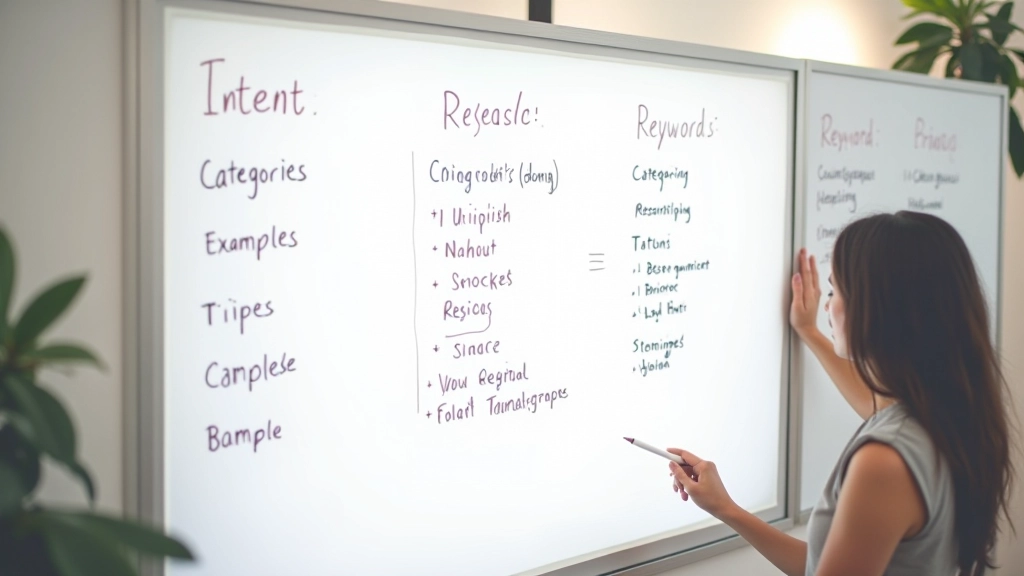
Every search falls into one of four intent buckets. Identifying which one you're targeting changes everything about how you structure your content.
Someone wants to learn something. "How to train for a 5K" or "what is interval training" — they're gathering knowledge. Content here? Guides, how-tos, explanations. These searches are high volume but usually lower conversion. That said, you're building trust here. Someone who learns from you today might buy from you next month.
They're trying to find a specific place. "Nike running shoes official site" or "Strava app login" — they know where they want to go, they're just using search to get there. Your own brand name searches fall here. This traffic is loyal but not huge in volume.
Buy, download, sign up — they're ready to do something. "Running shoes sale under 100 dollars" or "subscribe to fitness app" — wallet's out, decision's made. This is golden traffic. Lower volume usually, but much higher conversion.
They're deciding between options. "Brooks vs Asics running shoes" or "Peloton vs Apple Fitness comparison" — they're in the middle of the funnel. They've narrowed down their choices and now they're weighing pros and cons. Content here needs to be balanced, specific, and detailed.
Mapping isn't complicated. You're basically taking your keyword list and categorizing each one by intent. Then you're matching that intent to content you should create.
Start with keywords you're targeting. Don't overthink it — grab them from your SEO tools, competitor research, or keyword research platforms. You'll probably have 50-200 to start with depending on your niche.
Go through each keyword and ask yourself: what's someone trying to do when they search this? Are they learning? Buying? Comparing? You'll start seeing patterns. "Best" keywords usually mean comparison. "How to" means informational. Dollar signs or "buy" mean transactional.
Now you've got intent categories. Match them to what you'll actually create. Informational keywords get guides and tutorials. Comparison keywords get comparison posts or buying guides. Transactional keywords get product pages or pricing pages.
Don't try to create everything at once. Start with content that drives the most traffic or has the best conversion potential. Usually that's a mix of high-volume informational stuff (trust building) and high-intent transactional stuff (revenue).

Expand your keyword research skills with these related guides
Learn to identify whether searches are navigational, informational, or transactional — the foundation for targeting the right keywords.
Read Guide
Discover how targeting longer, specific keyword phrases can drive more qualified traffic and face less competition.
Read Guide
A step-by-step approach to discovering, analyzing, and prioritizing keywords with a system you'll actually stick with.
Read GuideThis guide is educational material intended to help you understand keyword research and search intent mapping concepts. Every situation is different — what works for one business might need adjustment for another. We've focused on practical, honest guidance rather than one-size-fits-all rules. Your actual results will depend on your niche, competition, audience, and how you implement these ideas. Think of this as a framework to build from, not a guaranteed formula.
You don't need a complex system to start. Grab your keyword list, spend 30 minutes categorizing by intent, and you'll immediately see what content makes the most sense to create first. Most people skip this step and wonder why their content doesn't convert. You'll be ahead because you're being intentional about what you build.
Intent alignment isn't magic. It's just being thoughtful about who's searching, what they want, and whether you can actually help them. Do that consistently, and you'll build content that ranks and converts.